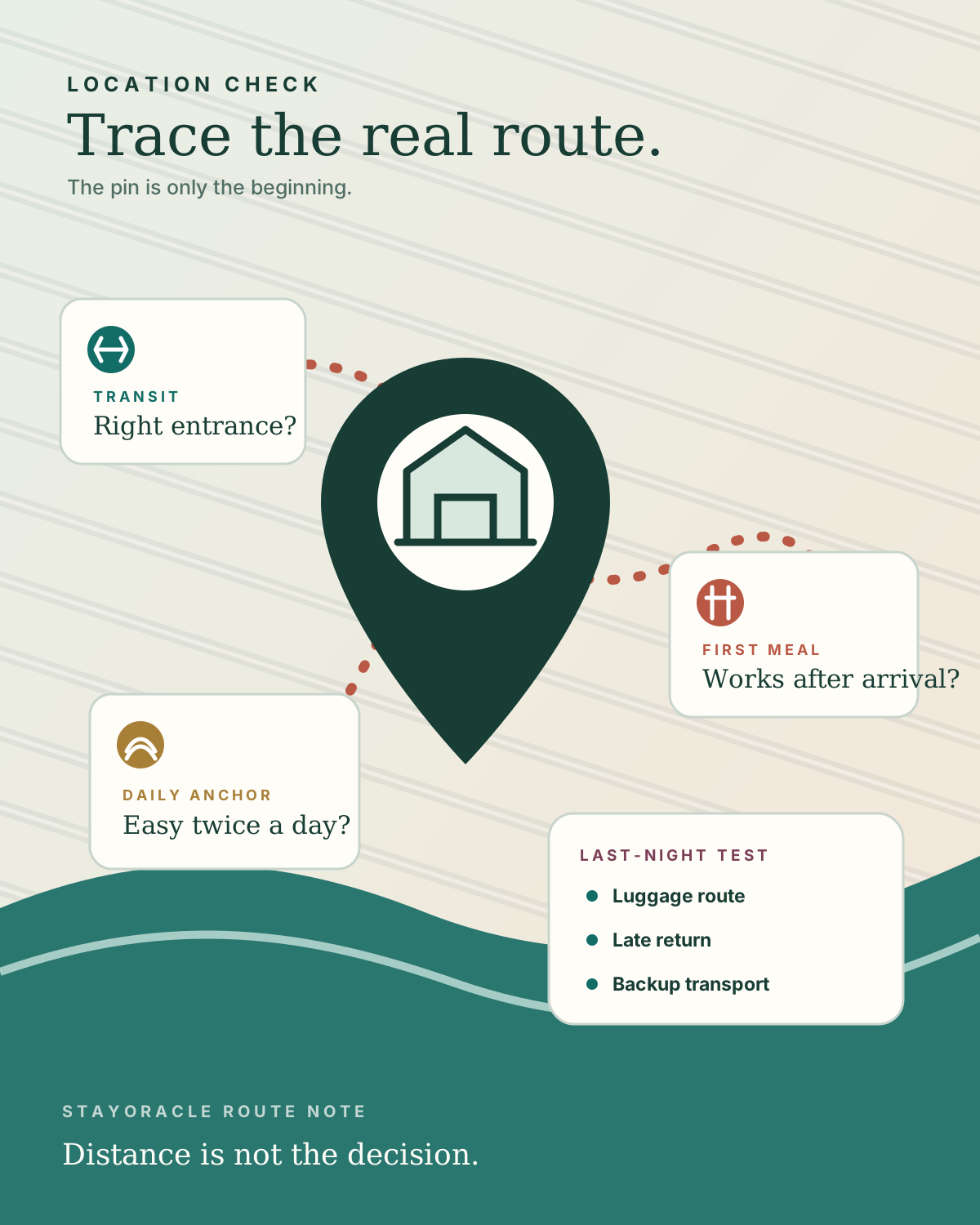
Choose the route that the hotel must make easy
Start with the group's most repeated movement. A location can be excellent for one trip and poor for another, even when the address and headline distance do not change.
| Trip pattern | Location should protect | Evidence to check |
|---|---|---|
| Short city stay | Station entrance, luggage route, late return, and one reliable meal | Exact exit, crossings, operating route, and the walk after dark |
| Beach and pool stay | A repeatable sand-to-room route and an easy midday return | Actual access point, road crossings, hills, shade, and wet-weather plan |
| Family trip | Fewer transfers, simple food, and a route that still works when tired | Stairs, stroller or luggage friction, meal backup, and vehicle pickup |
| Early tour or flight | Predictable pickup, reachable lobby, and enough transfer margin | Provider pickup zone, opening hours, traffic exposure, and backup transport |
| Quiet retreat | Low noise without making every meal or activity a difficult transfer | Nearest practical food, transport availability, and the after-dark return |
Plot the two anchors you will use most
Choose the one or two fixed places that shape the stay: the correct station entrance, beach access, office, hospital, pier, old-town gate, or family meeting point. Compare the hotel to those anchors before adding optional attractions.
For a Bangkok rail trip, check the operator's current route and station map rather than treating every rail icon as interchangeable. A nearby station on the wrong line can add the transfer that the location was supposed to remove.
Compare Bangkok bases by BTS, river, and old town →Audit the first and last 300 meters
Zoom to the route between the lobby and the station entrance, beach access, pickup point, or dinner street. Look for hills, stairs, major crossings, missing footpaths, service roads, entrances on the far side of a block, and whether luggage changes the route.
Do not infer accessibility from distance alone. If step-free access, a lift, smooth paving, lighting, or a safe crossing is essential, confirm it with a current official source or the property before booking.
Test the route at the time you will use it
The same block can solve a morning commute and fail a late arrival. Check the first-night route with luggage, the earliest fixed pickup, the likely dinner return, and the last transfer of the trip. Save a backup when the primary route depends on an operating window or a single connection.
24 Inn is a useful city example because its current provider evidence names the Sukhumvit address and Phrom Phong context. The booking decision still needs the exact station exit, walking route, and chosen room—not a generic 'near BTS' label.
Review the 24 Inn location guide →Treat food and essentials as route evidence
One realistic first meal, a convenience stop, and a transport fallback reveal more than a long attraction list. Check what still works after a delayed arrival, in rain, or when the group does not want another vehicle after check-in.
For families, that may mean breakfast and an easy dinner before optional sights. For solo or short-stay travellers, a visible return route and simple late food may matter more. For a quiet resort, confirm whether dining on site is a choice or the only practical plan.
Separate quiet from isolated
Quiet can be valuable when the hotel itself supports meals, pool time, spa, or planned transport. It becomes isolation when every ordinary need creates a new transfer and the group did not intend to spend most of the day on property.
Official Indonesia Travel guidance describes the real Ubud tradeoff: accommodation closer to town activity versus stays among greener surroundings, with hilly terrain affecting how some routes work. Use that decision pattern without assuming that every hotel marketed as Ubud is walkable to the same places.
Choose a Bali region by the daily route →Check beach access as a route, not a promise
A beach-area address does not show the access point, road crossing, hill, return route, or whether the group will want to walk back between swims. Trace the practical path from the lobby to the sand and repeat it for dinner or a rainy-day fallback.
Andaman Seaview's current provider page places the property in Karon and supplies a concrete address. That is the beginning of the location check; the traveler still needs to verify the route that matters to the selected trip and dates.
Compare Karon hotel location tradeoffs →Score the room and location separately
Give the exact room a score for sleep, space, bathroom, photos, and terms. Give the location a second score for the repeated route, arrival, meals, noise, and backup transport. Only then decide which tradeoff the trip can absorb.
A room upgrade can be worth more on a resort-led stay; a better route can be worth more on a short city stay. Separating the scores prevents a beautiful room from erasing daily friction or a central pin from excusing a room that does not fit the group.
Use the room comparison worksheet →Run the last-night test
Before paying, describe the location in one sentence using the actual route: 'This hotel works because we can reach the station entrance with luggage, return after dinner, and get to the airport pickup without changing the whole day.' If the sentence relies on 'near', 'central', or 'easy' without a route, the check is unfinished.
Save the hotel address, entrance note, primary route, backup transport, and first meal with the booking. That turns the location claim into an arrival plan the group can use.
Build the hotel arrival kit →Sources checked
Provider, operator, and official destination pages reviewed for this article on 12 July 2026. Transport, activity, and hotel service details can change, so reconfirm live terms before paying.
- BTS SkyTrain — official routes and stations Operator route and station information used to support checking the correct line and station rather than relying on a generic nearby-transit label.
- Trip.com — 24 Inn at BTS Phrom Phong Current provider page checked for the property's Sukhumvit address and Phrom Phong context; travelers should still verify the exact entrance and route.
- Trip.com — Andaman Seaview Hotel - Karon Beach Current provider page checked for the Karon address used in the beach-access example without treating a headline proximity claim as a walking-route guarantee.
- Indonesia Travel — Ubud Official destination guidance used for the town-access versus greener, hillier accommodation tradeoff; individual hotel routes still require current verification.