Choose the first-night handoff before the hotel label
Use the arrival condition you actually expect. Recheck current transport hours and pickup rules on the travel day; a scheduled landing is not a hotel-door arrival.
| Arrival condition | Start with | Hold the plan when |
|---|---|---|
| Comfortable BKK arrival window and light luggage | Compare Airport Rail Link via Phaya Thai or Makkasan with the final hotel leg | The last interchange, station exit, or walk has not been tested with the actual bags and group |
| Late, delayed, family, mobility, or heavy-luggage arrival | Compare an official taxi, app-based ride, hotel transfer, or prearranged vehicle | Pickup point, vehicle size, reachable contact, payment, or hotel entrance remains unclear |
| River or destination-dinner first night | Choose Silom or the river only when that evening is realistic after check-in | The reservation timing leaves no buffer for immigration, bags, traffic, room handoff, or dress rules |
| Simple overnight before a full Bangkok stay | Minimize the first transfer, then reassess the longer-stay area | One easy arrival would force several difficult daily routes afterward |
Start with the airport and the uncertainty after landing
Suvarnabhumi Airport's current transport page places the Airport Rail Link on Level B1 and lists taxi, Grab, limousine, bus, and other road choices. Thai government guidance identifies the city rail connections at Phaya Thai for BTS and Makkasan for MRT. That is the network map; the useful plan still includes immigration, bags, the service window, the final interchange, and the hotel door.
Save the full hotel address and a reachable contact before takeoff. For a late or uncertain arrival, favor fewer handoffs and a clear lobby entrance. For a comfortable daytime arrival with manageable luggage, compare rail plus the final leg against a door-to-door vehicle instead of assuming one mode always wins.
Make mobile data part of the transfer, not a hotel amenity
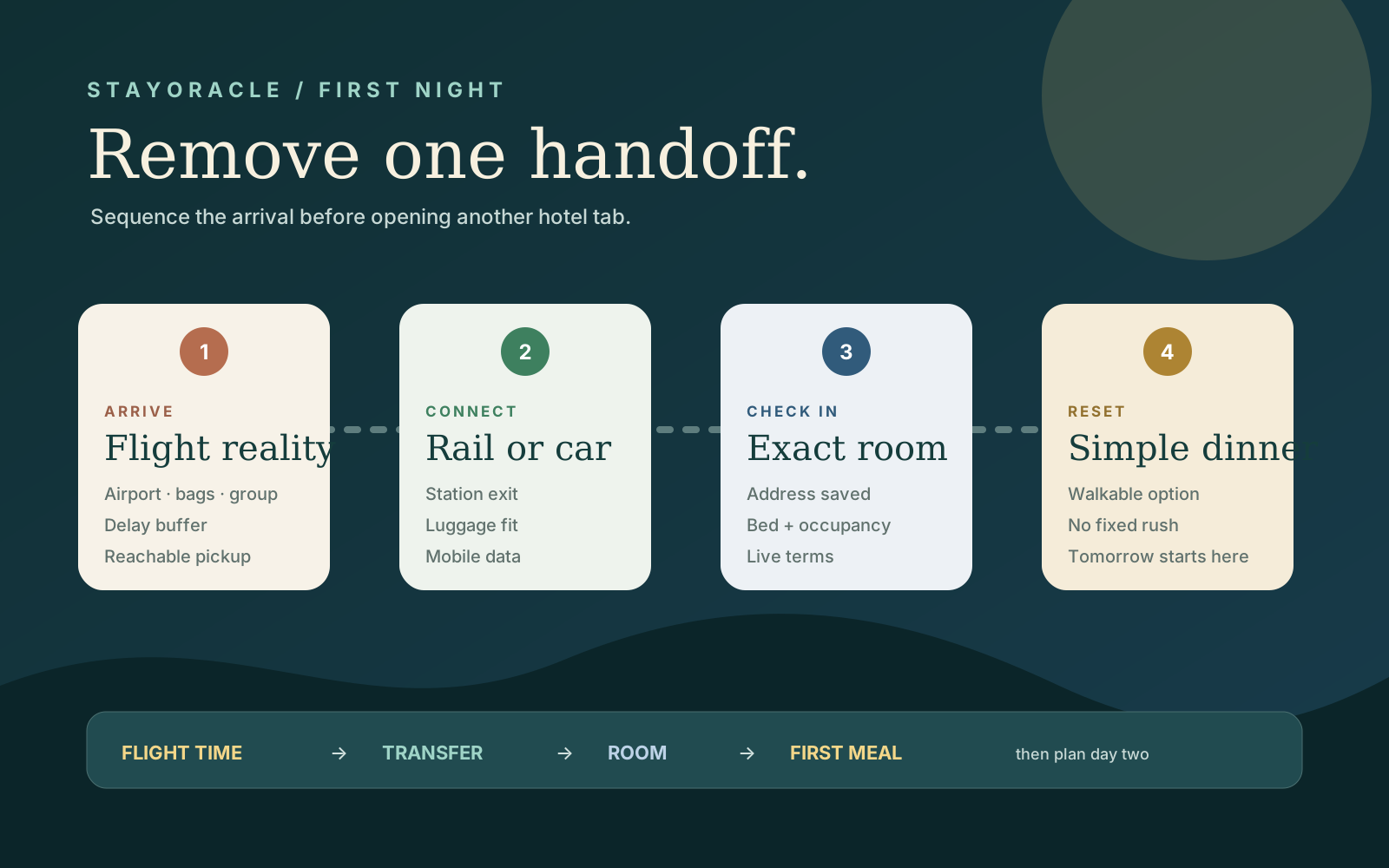
Set up roaming, an eSIM, or a local SIM before the route depends on maps, ride-hailing, pickup messages, or a booking confirmation. Hotel Wi-Fi begins after the hardest part of the handoff; it does not help when the driver and guest are using different exits.
Keep the selected hotel name, address, room, provider page, and transfer contact in one offline note. If the group separates, each person should be able to name the same property and show the same destination without reopening a chain of search results.
Match the first dinner to the energy left after check-in
A river or rooftop dinner can justify a Silom-area first night only when the arrival leaves a real buffer. lebua's current first-party page lists multiple restaurants and bars with different reservation guidance, so the venue—not the hotel's skyline image—must control the timing and access check.
After a long or uncertain journey, a walkable meal, food court, room-service check, or simple nearby option is often the stronger plan. Save the destination dinner for a night when the group can enjoy it without converting every airport delay into a missed reservation.
Use current room evidence as a door-and-room check
Use the StayOracle Stays pages to compare named room rows and the questions still unresolved. For a first night, reception access, luggage handling, room-facing direction, and a reliable bed matter more than an amenity the group will not use.
Then use Trip.com or the named booking provider for live availability, the exact room, occupancy, taxes, cancellation deadline, payment timing, and final total. Recheck the hotel name and address before payment; a similar property label is not close enough after midnight.
Keep the first-night shortlist to three different jobs
Keep one rail-first option, one door-to-door or simple-arrival option, and one destination-evening option only when the evening is genuinely part of the trip. That forces each hotel to solve a different problem instead of producing a long list of generic Bangkok stays.
For a Phrom Phong rail base, use 24 Inn as the compact BTS comparison. For Silom, river views, or an on-property dinner, use lebua at State Tower as the destination-stay comparison. For a Samsen and Old Town plan, use Tara Place as the neighborhood comparison. None is a universal winner; each still needs the exact room and current route.
Book the handoff in the order it can fail
First confirm the hotel name, exact room, dates, guests, cancellation window, payment timing, and final total. Second choose rail or road transport and save the pickup or station exit. Third set up mobile data. Fourth choose the first meal with enough buffer to remain enjoyable.
StayOracle is an independent planning guide and may earn a commission from eligible links. Trip.com and the named providers control live inventory, transport availability, inclusions, prices, policies, and final terms; this checklist creates no urgency or guarantee.
Sources checked
Provider, operator, and official destination pages reviewed for this article on 12 July 2026. Transport, activity, and hotel service details can change, so reconfirm live terms before paying.
- Suvarnabhumi Airport — transportation Official airport transport choices and Airport Rail Link station location used for the arrival sequence.
- Thailand Government — Airport Rail Link connections Government guidance for the Phaya Thai BTS and Makkasan MRT connections; travel-day service details still need reconfirmation.
- BTS Skytrain — routes and stations Official BTS route context used to test whether the rail handoff continues naturally toward the selected hotel area.
- Bangkok MRT — Blue Line stations Official MRT station list used for the Makkasan-to-Phetchaburi and Old Town continuation checks.
- lebua at State Tower Current first-party address, room-view, restaurant, bar, and reservation context used for the destination-dinner check.